
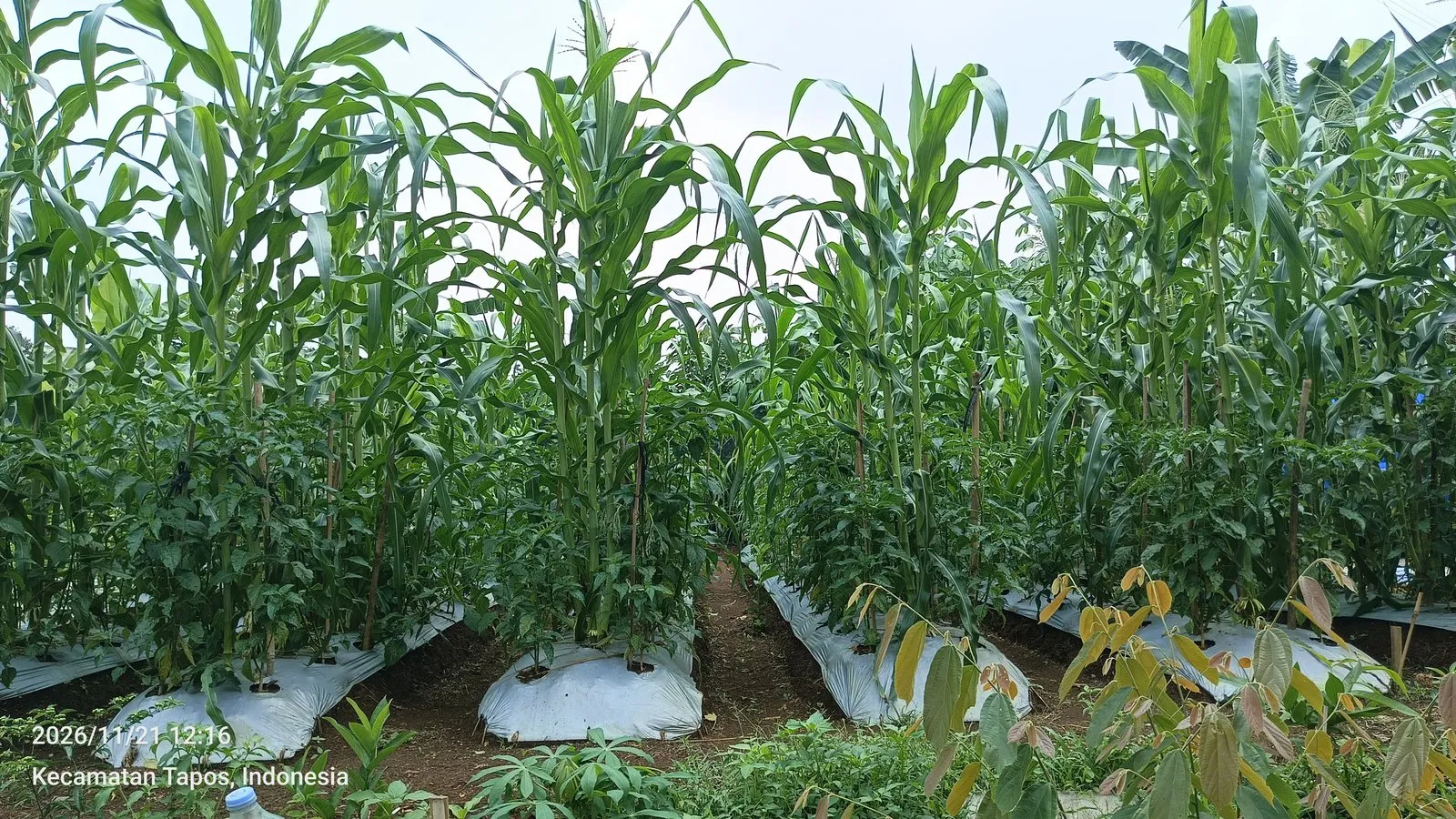
COHESION visited Kebun Inovasi Banjaran in Depok to learn more about integrated farming practices and explore opportunities for developing a sustainable farming model. The site brings together agriculture, goat and cattle farming, and fish cultivation in one location, with a variety of crops including corn, water spinach, and chillies.
An integrated farming approach allows different food production activities to complement one another while making more efficient use of available resources. For example, livestock manure can be processed into organic fertiliser, crop residues can be reused as animal feed, and nutrient-rich pond water may be used for irrigation. This circular use of resources can help reduce waste and promote more environmentally sustainable food production practices.

The diversity of products also has the potential to support local food availability and improve access to a variety of foods, including animal-source foods, fish, and vegetables. In addition, the site could be developed as an educational tourism destination (edutourism), offering students, families, and communities opportunities to learn firsthand about the connections between food production, nutrition, and environmental sustainability.
For COHESION, this visit marks an initial step in exploring the potential of Kebun Inovasi Banjaran as an integrated farming pilot project. Through further assessment and collaboration with relevant stakeholders, opportunities could be identified to connect food security, improved nutrition, community empowerment, and environmental sustainability.